
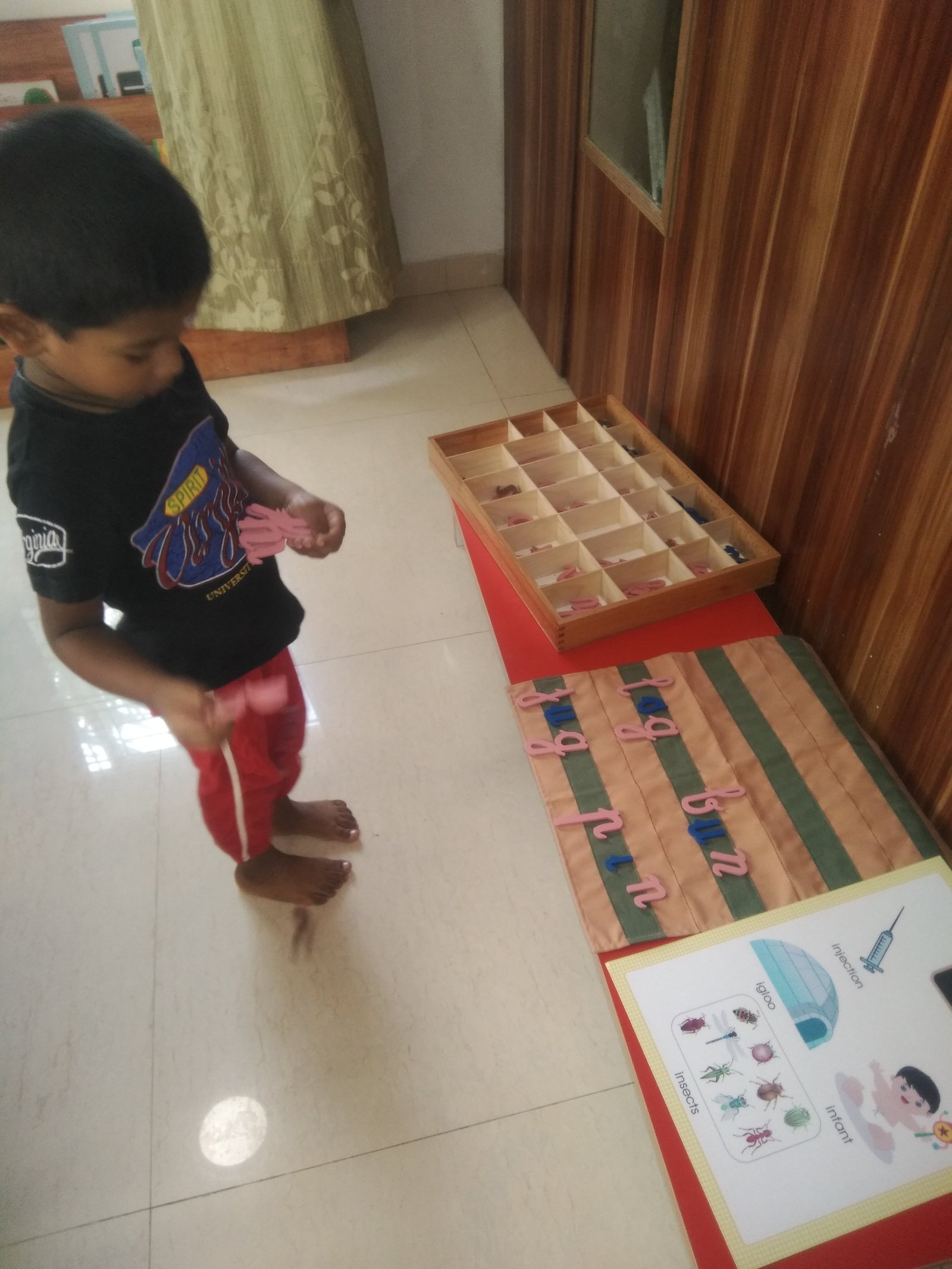
Why physical handling of cylinder blocks, golden beads, and sandpaper letters creates intuitive understanding of math and literacy.
The Hand is the Chief Teacher of the Brain
Modern neuroscience repeatedly confirms what Dr. Montessori proved over a century ago: children think through their hands. Abstract concepts such as weight, dimension, volume, and quantity can only be deeply understood when grounded in bodily sensory experience.
The Montessori Sensorial Apparatus
In our classrooms at Bollineni Hillside, sensorial materials are engineered to isolate single physical qualities:
- The Pink Tower: Ten wooden cubes varying progressively from 1cm to 10cm, developing visual discrimination of three dimensions and early cubic concepts.
- The Cylinder Blocks: Four distinct blocks teaching diameter, height, and depth, while naturally exercising the pencil-holding pincer grasp.
- The Color Tablets: Grading subtle shades from pale pastel to rich tones, refining aesthetic discernment.
- Thermal & Baric Tablets: Heightening tactile temperature and weight awareness.
The Leap to Mathematics
Because children physically feel that 1000 is a heavy, solid bead cube while 1 is a tiny bead unit, they never struggle with the concept of place value later. Physical experience precedes symbolic notation, turning math from a source of anxiety into an exhilarating game of discovery.